E-Way Bill Under GST: The Complete Guide for Businesses in India
Everything you need to know about generating, managing, and staying compliant with the E-Way Bill system under India's Goods and Services Tax framework.

The implementation of the E-Way Bill system has transformed the way goods are transported across India. Before digital documentation under GST, businesses faced multiple regulatory hurdles, excessive paperwork, and delays at interstate checkpoints.
To simplify the transportation process and improve tax transparency, the Government of India introduced the E-Way Bill system — a digital platform that enables businesses to generate electronic permits for transporting goods.
For companies involved in logistics, manufacturing, distribution, or e-commerce, understanding the E-Way Bill under GST is essential for compliance and operational efficiency.
What is an E-Way Bill?
An E-Way Bill (Electronic Way Bill) is a digital document generated online for the movement of goods from one location to another. It is required when the value of goods exceeds ₹50,000 as defined under GST regulations.
The electronic document contains key details such as:
- GSTIN of supplier and recipient
- Invoice or delivery challan number
- Description and value of goods
- Vehicle number used for transportation
- Transporter details
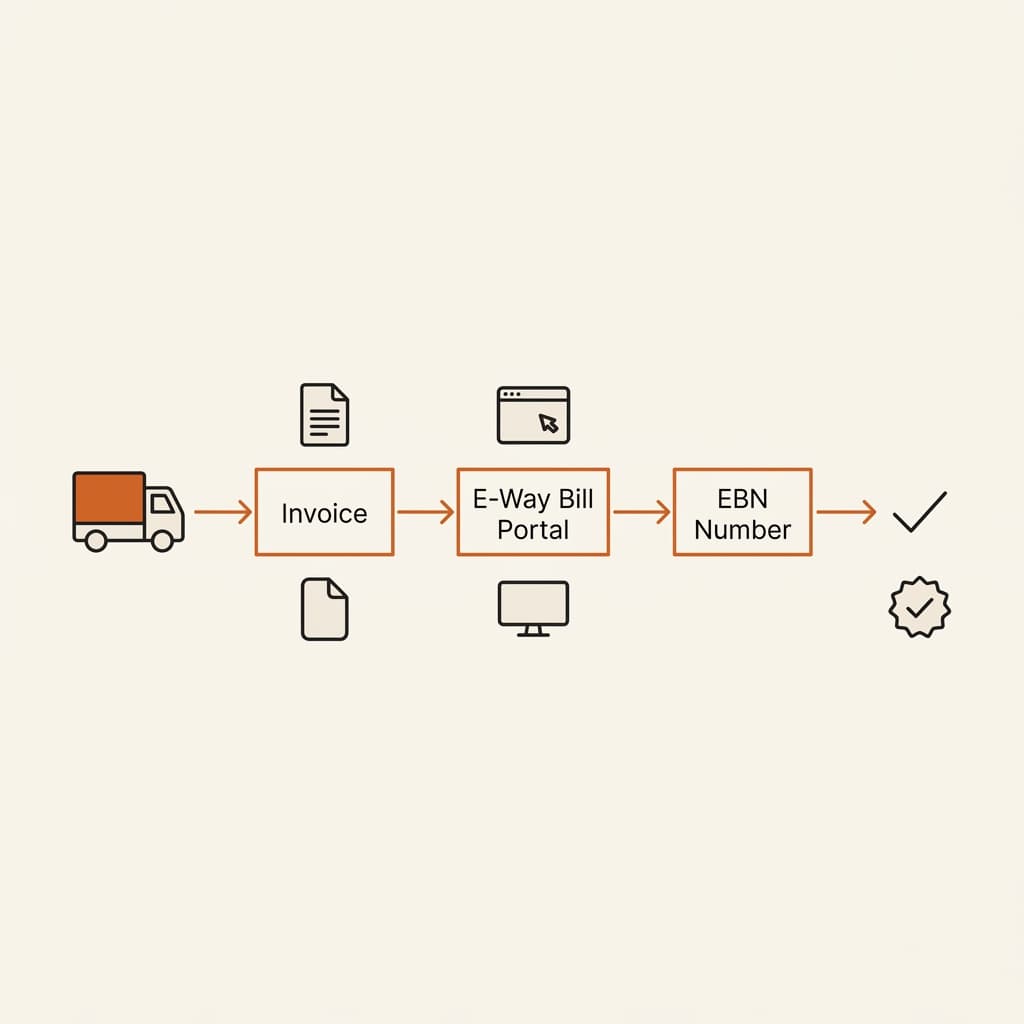
Once generated, the system assigns a unique E-Way Bill Number (EBN) that can be used to track the movement of goods throughout transit.
Why Was the E-Way Bill System Introduced?
Before GST, goods moving across states were subject to different taxation systems and checkpoints. This resulted in long delays, complicated paperwork, and rampant tax evasion.
The primary objectives of the system include:
- Reducing tax evasion through digital tracking of goods
- Improving logistics efficiency by eliminating checkpoint delays
- Enhancing transparency with real-time goods movement monitoring
- Simplifying compliance with online generation instead of tax office visits
When is an E-Way Bill Required?
An E-Way Bill must be generated when the value of goods being transported exceeds ₹50,000. This applies to:
- Interstate movement of goods between states
- Intrastate movement (many states require it within the same state)
- Supply of goods from seller to buyer
- Goods returned or sent for job work (repair, manufacturing, processing)
- Imports and exports through ports or airports
Even if the value is less than ₹50,000, businesses may voluntarily generate an E-Way Bill for documentation purposes.
Who Should Generate an E-Way Bill?
The responsibility depends on who arranges transportation:
| Scenario | Responsible Party | |----------|------------------| | Supplier arranges transport | Supplier generates the bill | | Recipient arranges transport | Recipient generates the bill | | Neither generates it | Transporter must generate it |
This ensures goods moving through the supply chain are always properly documented.
Documents Required
To generate an E-Way Bill, businesses need:
- GSTIN of supplier and recipient
- Invoice or bill of supply
- Delivery challan (if applicable)
- Transporter ID
- Vehicle number used for transport
- HSN code of goods
Providing accurate information is essential to avoid penalties and delays during transit.
How to Generate an E-Way Bill Online
Step 1: Log in to the official E-Way Bill portal using GST credentials.
Step 2: Enter transaction details — supplier/recipient information, invoice number, value of goods, and HSN code.
Step 3: Provide transport details — transporter ID, vehicle number, and mode of transport.
Step 4: Generate the bill. The system assigns a unique EBN number that must be shared with the transporter for verification during transit.
Validity of an E-Way Bill
The validity depends on the distance goods are transported:
| Distance | Validity | |----------|----------| | Up to 200 km | 1 day | | Up to 400 km | 2 days | | Up to 600 km | 3 days | | Each additional 200 km | +1 day |
If goods cannot reach their destination within the validity period due to unforeseen circumstances, the transporter may extend the validity.
Critical Compliance Rules
One Invoice — One E-Way Bill. Each invoice requires a separate bill.
Vehicle updates are mandatory. If the vehicle changes during transportation, details must be updated in the portal.
Cancellation window is 24 hours. An E-Way Bill can be cancelled within 24 hours if generated incorrectly.
Recipient acceptance within 72 hours. The recipient must accept the bill within 72 hours, otherwise it is automatically accepted by the system.
Penalties for Non-Compliance
Failure to generate an E-Way Bill when required leads to serious consequences:
- Penalty of ₹10,000 or the amount of tax evaded
- Detention or seizure of goods
- Vehicle confiscation
- Legal action under GST regulations
To avoid such penalties, businesses must ensure proper documentation before transporting goods.
Benefits of the E-Way Bill System
- Faster movement of goods — electronic documentation eliminates checkpoint queues
- Reduced paperwork — no need for large volumes of physical documents
- Improved transparency — real-time monitoring of goods movement
- Better compliance — digital records reduce tax evasion risk
- Simplified logistics — transporters verify documentation using the EBN number
Common Challenges and Solutions
Manual data entry errors → Integrate automated software with your invoicing system to auto-populate fields.
Changing transportation routes → Update vehicle details promptly in the portal when routes change.
Managing multiple shipments → Large enterprises should adopt ERP-integrated E-Way Bill generation.
System downtime → Maintain offline records and generate bills as soon as the portal is accessible.
The Bottom Line
The E-Way Bill system under GST has revolutionized the transportation of goods in India by introducing digital documentation and improving compliance. Understanding the rules, generation procedures, validity limits, and penalties is essential for smooth logistics operations.
As businesses continue to digitize their operations, integrating automated systems for E-Way Bill generation and GST compliance will become increasingly important for staying competitive and avoiding costly penalties.