MCP is Dead: Why you should avoid using MCP in Claude Code
A deep dive into why universal protocols might be hindering your AI integration strategy.

Model Context Protocol (MCP) is an open-source standard that allows AI models to seamlessly connect with external data sources, tools, and software systems.
MCP is a plug-and-play technology, like USB, but for AI.
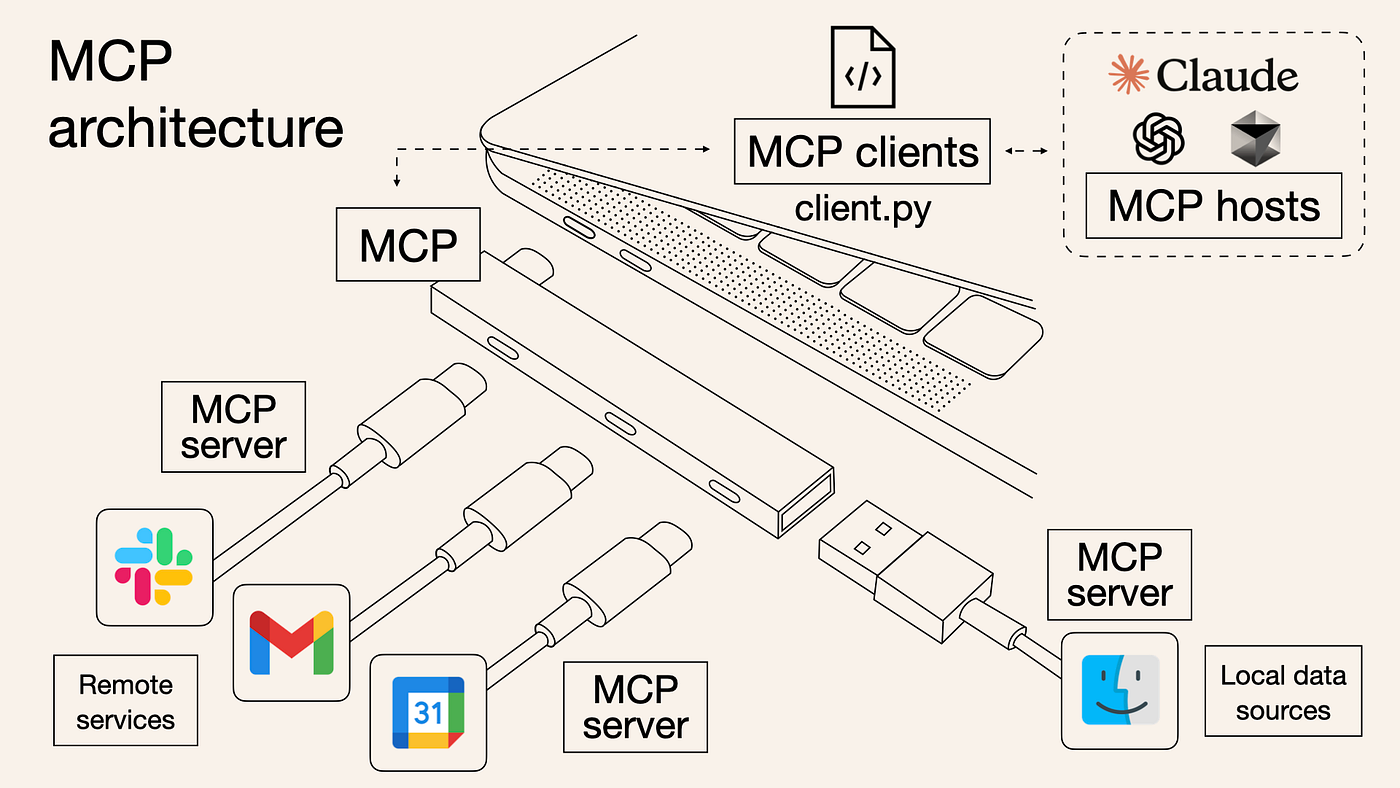 MCP architecture.
In this article, I want to explain 5 reasons why using MCP is a bad idea and what you should use instead.
Problem #1: MCP Adds Extra Level of Complexity
MCP is typically compared to API. While APIs have been the backbone of software communication for decades, MCP introduces an abstraction layer that often complicates simple data exchanges.
# Example of API method that returns information about the user from a DB

## API Request
GET /api/users/{id}

## API Response
{
  "id": 123,
  "name": "Mohammad Altaf",
  "email": "altaf@adowise.com"
}
Problem #2: The Hidden Performance Overhead
In high-frequency sales environments, every millisecond counts. MCP's universal protocol approach means that it often carries significant metadata baggage. When your AI is trying to qualify 10,000 leads in real-time, the overhead of translating specialized data into a generic protocol can cause noticeable lag.
We've observed that direct-to-database integrations or specialized micro-APIs consistently outperform MCP-based connectors by as much as 40% in processing speed. For a growth engine like Adowise, this difference is the margin between a booked meeting and a missed opportunity.
Problem #3: Security Risks and Access Control
Standardization often comes at the cost of granular security. MCP's "plug-and-play" nature can inadvertently expose more data than necessary. Without a robust, custom-built security layer between your sensitive prospect data and the AI model, you're essentially handing over a master key.
"In enterprise sales, data isn't just power—it's a liability if not handled with surgical precision."
Conclusion: What to Use Instead
Instead of relying on generic protocols, we recommend building context-aware integration layers. These layers should be designed specifically for the AI's intent, providing only the data needed for a specific task without the overhead of a universal standard.
At Adowise, we've pivoted towards this intent-based architecture, and the results speak for themselves: faster responses, better qualification accuracy, and a more secure environment for our clients' data.